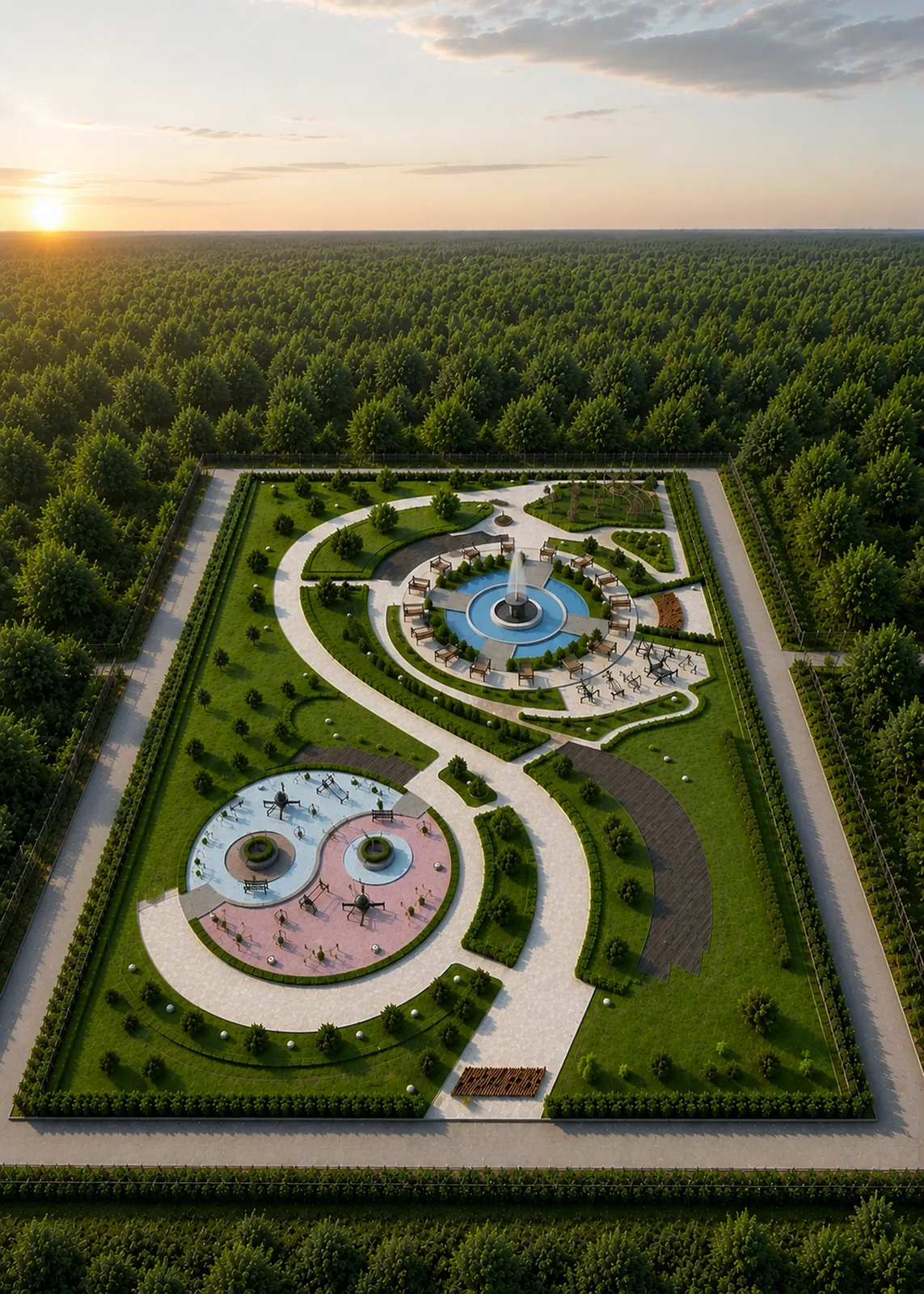
Landscape and real estate teams often need visuals long before there is budget for a full 3D model. AI renders fill that gap well, as long as you treat them as design work and not as a lucky prompt.
Start from the plan
Every set we make starts with a top-down plan: paths, zones, water, play areas. The master plan render is drawn from it first, so all later views agree on where things are. Without that step the fountain moves between pictures and the client notices.
Pair the views
One aerial view explains the layout. One or two eye-level views explain the feeling. For a forest park that meant:
- an aerial shot at sunset with the whole site in frame;
- the fountain plaza from bench height;
- the amphitheater steps facing the screen between the pines.
Fix by hand
AI is fast at light, foliage and materials. It is bad at benches that float, paths that end nowhere and fences that change height. We go over every frame and repaint those spots by hand before anyone outside the studio sees it.
Label it as a concept
These images sell an idea, not a finished site. We always say so on the slide, and we keep the same time of day and color grade across the set, so the series reads as one proposal.
Done this way, the renders come together long before a full 3D model would, and the client walks into the meeting with something people can react to.